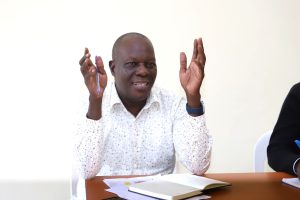
 Dr. Kirya Denis, the District Health Officer for Namutumba, began his remarks by expressing appreciation to MJAP and the Government of the United States for the continued support to Namutumba District Local Government. He noted that this support is clearly visible across the district and is highly appreciated, especially at a time when many partners have scaled down or withdrawn their support.
He emphasized that such support should not be taken for granted, highlighting that Primary Health Care (PHC) remains the district’s main funding source, yet allocations are often insufficient. Without additional partner support, he noted, it becomes extremely difficult to effectively implement TB and HIV-related interventions. Dr. Kirya acknowledged that the collaboration with MJAP has yielded tangible results, which are evident on the performance dashboards showing improved indicators across various program areas. He affirmed that the district continues to work very closely with MJAP.
On service integration, Dr. Kirya noted that the Ministry of Health has made a clear policy shift toward integrated service delivery, and commended MJAP for playing a key role in operationalizing this approach within the district. He highlighted training, mentorship, and the adoption of the chronic care model as key successes. While there were initial concerns that integration might compromise patient privacy, he confirmed that privacy has been well maintained and that the district has not registered any related complaints. He thanked MJAP for this achievement.
Dr. Kirya further highlighted the portable digital X-ray machine as an exceptional intervention that has significantly improved TB case identification due to its mobility and flexibility. However, he raised concerns about the lack of qualified personnel to operate the equipment, noting that the district’s wage bill cannot support the recruitment of a radiographer. He stressed the importance of sustaining this intervention, as TB case detection has historically been a major challenge in Namutumba District.
Finally, he commented on the training of Community Health Workers (CHWs), noting that the 22 recruited CHWs are young, energetic, and motivated. However, he expressed concern about the Ministry’s rapid scale-up to new districts without fully consolidating and sustaining existing ones, especially where allocated budgets have already been exhausted. He cautioned that this could negatively affect district performance indicators that had previously shown strong results.
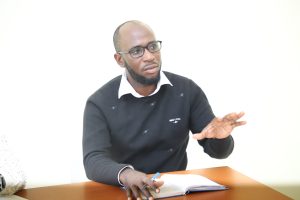 The District Program Specialist, Mr. Gerald Ahimbishibwe, noted that MJAP implements a district-led approach, working closely with district leadership to jointly develop and implement plans. He emphasized that this collaborative approach extends to service integration, highlighting that a significant portion of resources has been dedicated to facilitating monthly integration meetings across various health facilities, all supported through Primary Health Care (PHC) funds.
The Technical Director, Dr. Paul Lwevola, expressed appreciation to the district for the strong collaboration—not only with MJAP but also with other partners—which has contributed to the achievement of positive results. He further commended the district for accommodating the District LIN team and actively engaging them in all district activities.
Mr. Patrick Kabagambe from the LEAP team thanked MJAP for the strong collaboration and effective working relationship with Namutumba District, particularly for establishing a well-structured, district-led team approach.
“As the Department of State, we would like to thank you for the good leadership and strong governance,” he noted.
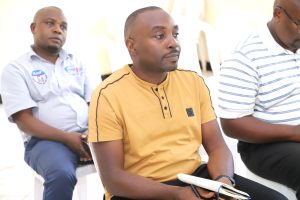 Mr. Kabagambe also responded to concerns raised during the discussion, explaining that the Long-Term Exceptional Technical Assistance Project (LEAP) supports local programme implementation by embedding specialists within Ministry of Health systems in countries where the U.S. Government operates. These specialists focus on building local capacity and supporting the America First Agenda.
He further clarified that LEAP’s scope extends beyond TB and HIV to include Maternal and Child Health (MCH), malaria, global health security, and Human Resources for Health, among other areas, reinforcing a comprehensive and integrated approach to strengthening health systems.